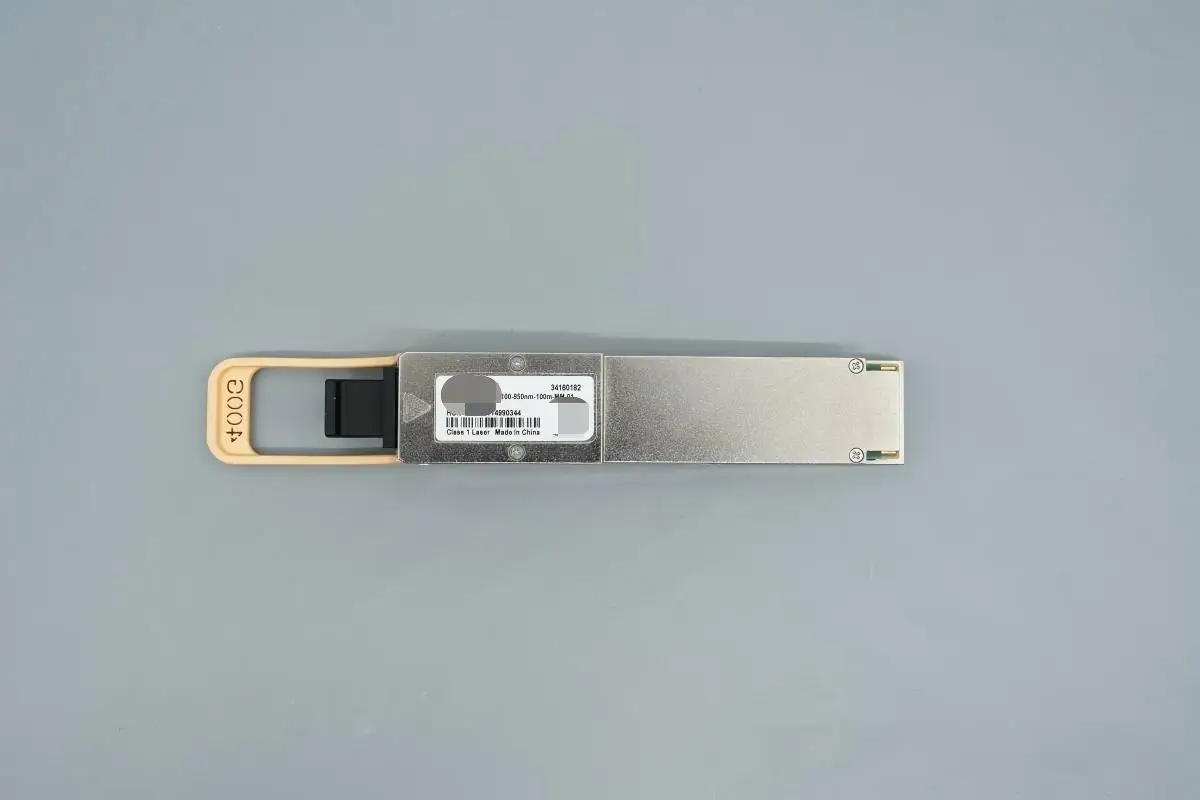
Customer Issue:
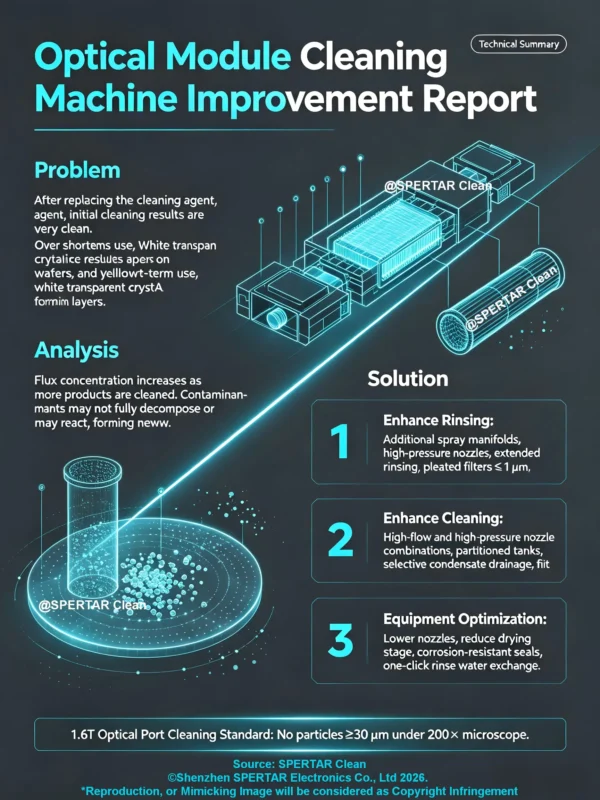
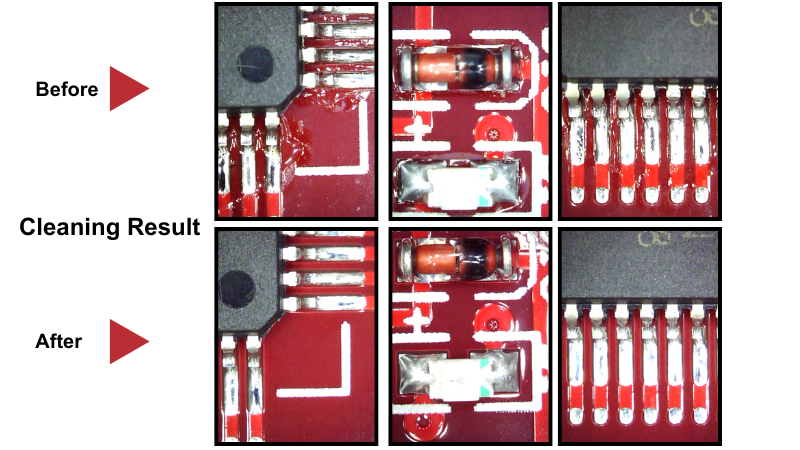
When replacing with a new cleaning solution, the cleaning performance is excellent and no issues are observed. However, after the cleaning solution has been used for a short period of time, white transparent crystalline residues appear on the wafers, and yellow spots are found on the gold-plated layer (Ni/Pd/Au finish).
On-site Analysis and Conclusion:
Through on-site analysis, it was concluded that as the number of cleaned products increases, the concentration of flux contaminants in the cleaning solution gradually rises.
The flux contained in the cleaning solution is not completely decomposed, or it reacts with other components in the cleaning process and forms new contaminants. These contaminants have strong adhesion and high viscosity, making them difficult to remove from the product surface through the rinsing process.
Equipment Improvement Tips:
I. Strengthen the Rinsing Section:
- Add two upper spray bars before the pre-rinsing section. The sprayed water should be directly drained instead of recirculated, ensuring the cleanliness of the rinsing water and preventing contaminants from entering the rinsing section.
- Use high-pressure spray nozzles in the rinsing section. Since contaminants are strongly attached to the product surface, higher spray pressure is required to effectively remove them.
- Extend the length of the rinsing section.
- Add one additional spray bar at both the upper and lower positions in the final rinsing section.
- Use pleated filter cartridges to prevent secondary water contamination. Filtration accuracy should be ≤1 μm.
- The rinsing water replacement flow rate should be ≥1.5 T/H.
II. Strengthen the Cleaning Section:
- Use a high-flow nozzle combination in Cleaning Stage 1 and Cleaning Stage 2, and use a high-pressure nozzle combination in Cleaning Stage 3.
- It is recommended to divide the cleaning liquid tank into separate sections to reduce the amount of cleaning solution required during replacement.
- Condensed and recovered cleaning solution should be selectively discharged or filtered before being returned to the cleaning liquid tank.
- Use pleated filter cartridges for cleaning solution filtration, with a filtration accuracy of ≤1 μm.
III. Overall Equipment Improvements:
- Lower the height of all spray nozzles to improve cleaning and rinsing effectiveness.
- One drying section can be reduced if necessary.
- All sealing rings should use corrosion-resistant materials.
- Add a one-click rinsing water replacement function in the equipment control program.
Cleaning requirement for 1.6T optical module optical ports: Under 200× microscope inspection, no particles ≥30 μm are allowed to remain on the optical port surface.
Source: SPERTAR Clean R&D Team on July 15th 2026.
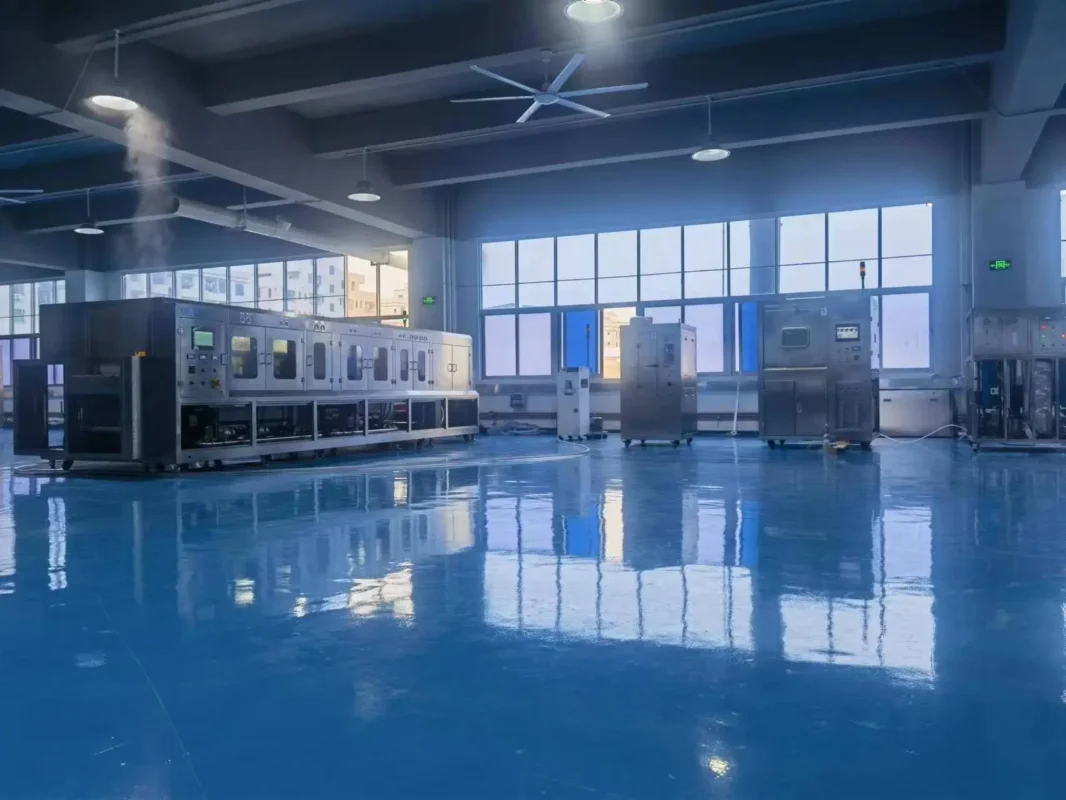
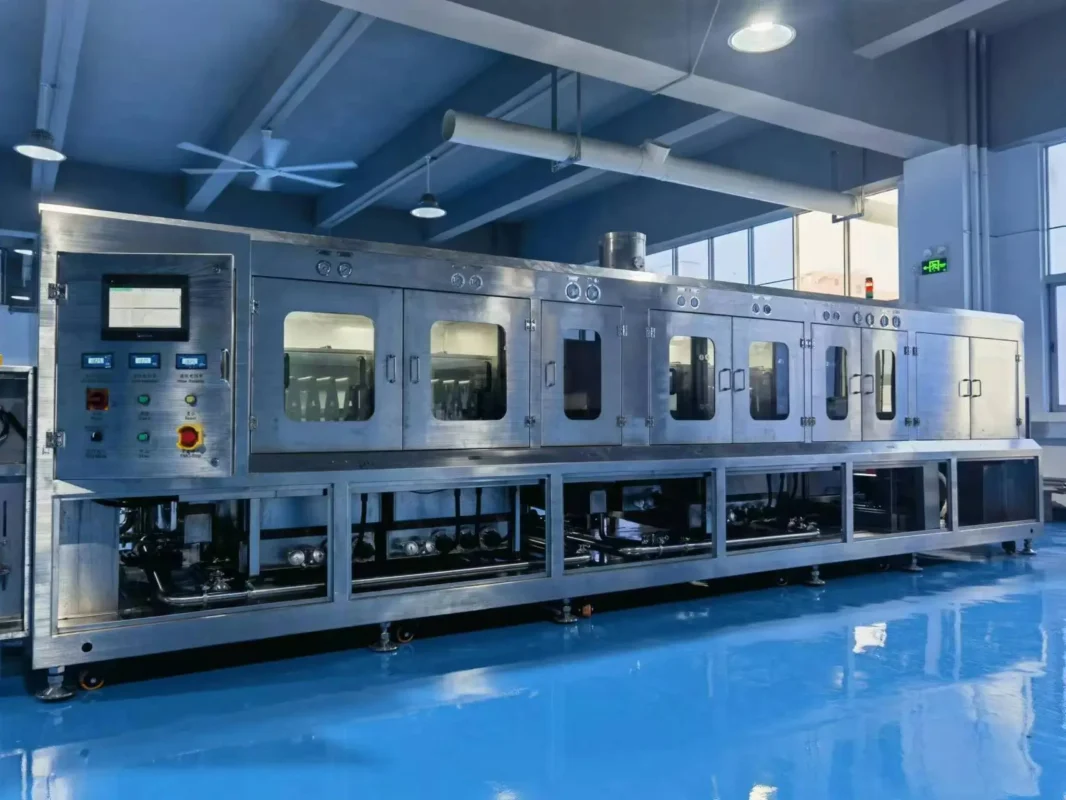
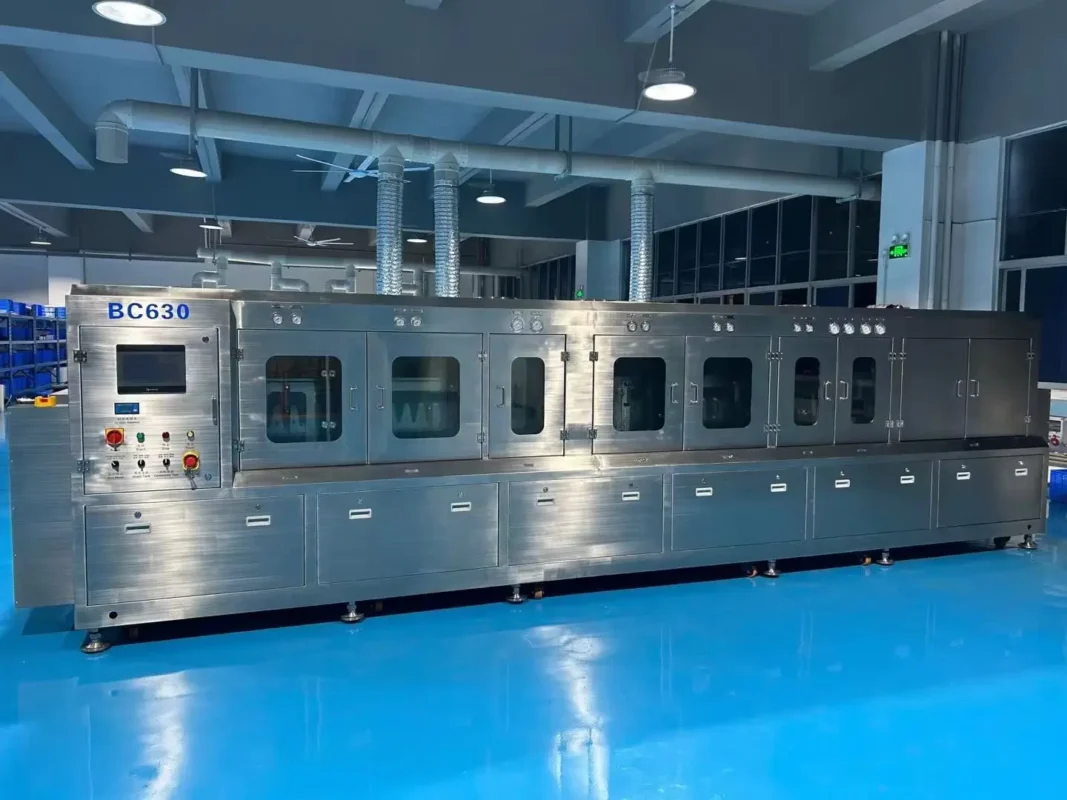
Optical Module Cleaning Machine FC820
@Shenzhen SPERTAR Electronics Co., Ltd 2026.
Follow us to discover professional optical module cleaning machines designed to remove flux residues, eliminate white crystalline contamination, prevent Ni/Pd/Au discoloration, and meet precision particle cleanliness requirements for advanced optical module manufacturing.