The final outcome of this multi-quadrillion-KRW reshaping of South Korea’s semiconductor landscape awaits an official announcement.
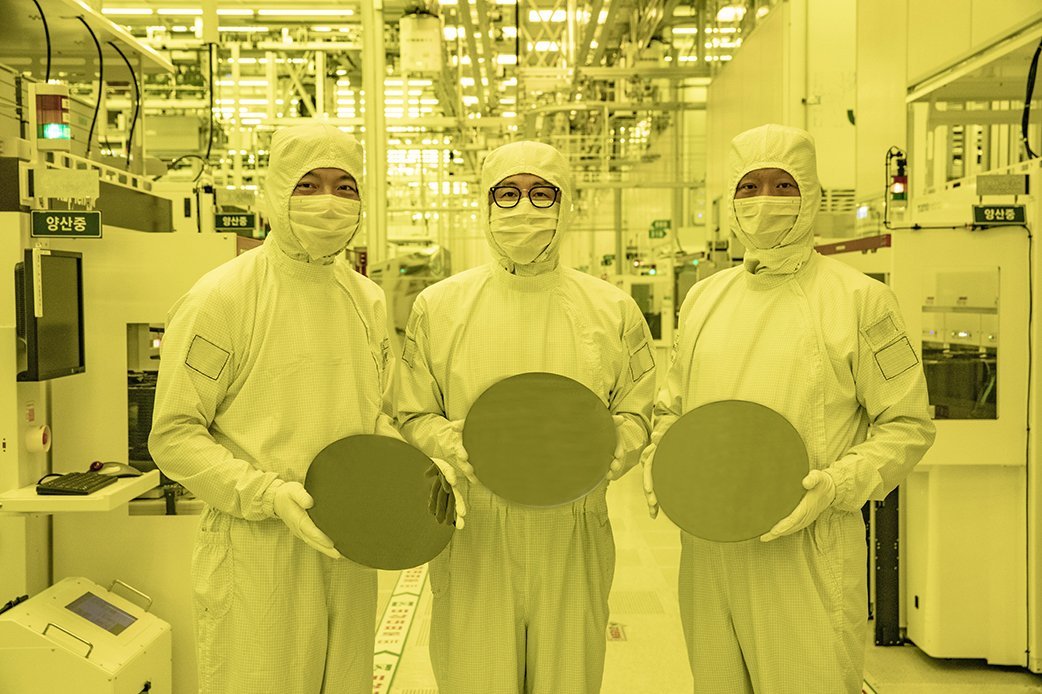
On June 23, industry sources in South Korea revealed that Samsung Electronics and SK Hynix are actively evaluating plans to build a mega semiconductor industrial cluster including front-end wafer fabrication facilities in Honam, the southwestern region of the country. This potential multi-quadrillion-KRW investment proposal has sparked widespread market concerns that the prearranged semiconductor investment blueprint for Yongin, Gyeonggi-do, may face budget cuts or revisions.
It is reported that Samsung and SK Hynix are reassessing their plans for a semiconductor industrial hub in Honam. Unlike the initial discussions focused solely on advanced packaging facilities, the current proposal has expanded to include front-end semiconductor fabs. Industry insiders speculate Samsung’s investment could exceed 200 trillion South Korean won, with SK Hynix poised to commit an even larger sum.
The two firms have completed assessments of water supply, power supply, transportation and supporting infrastructure across five candidate sites, including Buk-gu of Gwangju, the 3rd Advanced Zone in Jangseong-gun of South Jeolla Province, and the National Future Automotive Industrial Complex. Compared with Gyeonggi-do, Honam boasts abundant land, water resources and power infrastructure. In addition, Gwangju has already fostered a mature semiconductor back-end industrial ecosystem led by Amkor Technology.
Senior government and business figures in South Korea have held intensive consultations to push forward this large-scale regional investment initiative. Choi Taewon, Chairman of SK Group, visited the Presidential Office on June 19, while Lee Jae-yong, Chairman of Samsung Electronics, is scheduled to meet President Lee Jae-myung on June 25. Executives from both companies plan to further refine the proposal with President Lee on June 29.
Industry forecasts indicate the investment agreement will most likely be officially signed during the Southwest Regional Development Forum to be held in Gwangju on June 30. Min Hyeong-bae, incoming governor of the special metropolitan zone covering Gwangju and South Jeolla Province, previously hinted that the government and enterprises have prepared for the project for a long time, with an investment scale far exceeding initial expectations, and an official statement is imminent.
This massive proposed investment in Honam has triggered fierce controversy, with widespread external fears that part of the funding earmarked for the Yongin semiconductor project could be diverted. Samsung previously unveiled plans to construct a national advanced system semiconductor industrial complex in Yongin with an investment of 360 trillion won, encompassing six semiconductor fabrication plants and supporting facilities. The long-term total investment planned for the entire Yongin semiconductor cluster stands at a staggering 960 trillion won.
The Yongin municipal government issued an immediate stern response. On June 23, Yongin Mayor Lee Sang-il released a statement reading: “Yongin citizens will never tolerate any attempt to embroil the Yongin National Advanced System Semiconductor Industrial Complex — a national strategic project — in public disputes and sabotage its development.”
Amid widespread speculation and doubts, both Samsung Electronics and SK Hynix maintained that no final decision has been made regarding the Honam investment plan. Officials from the South Jeolla Provincial Government and Gwangju Municipal Government also stated there is no confirmed information matching the investment scheme covered in the reports.
Analysts point out that although the South Korean government is vigorously pursuing balanced regional development, front-end wafer manufacturing imposes extremely stringent requirements on infrastructure, high-end talent and supporting industrial chains. While Honam enjoys advantages in water, electricity and land availability, it still faces bottlenecks in high-calibre talent and industrial ecosystem maturity. The final outcome of this multi-quadrillion-KRW reshaping of South Korea’s semiconductor landscape awaits an official announcement.
Editor: Jimmy.zhang