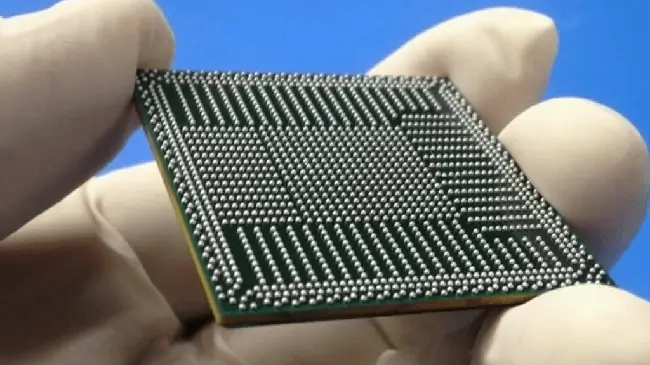
Learn what causes flux residue after BGA ball mounting, why flux is required in semiconductor packaging, and how improper cleaning leads to reliability risks in advanced electronics manufacturing.
What Causes Flux Residue After BGA Ball Mounting?
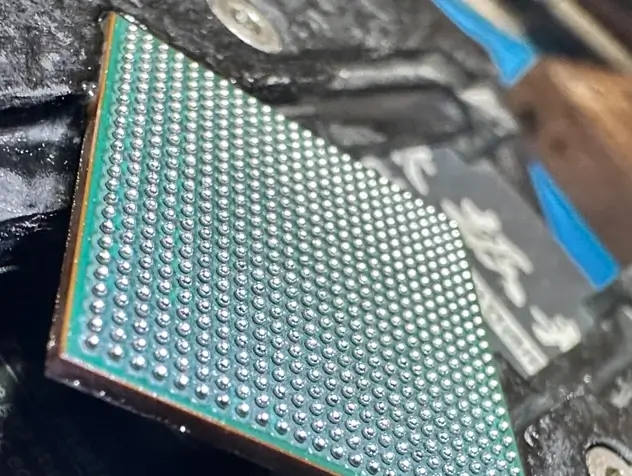
Introduction
In modern semiconductor packaging and advanced PCB assembly, BGA (Ball Grid Array) ball mounting is a critical process that directly affects electrical performance, mechanical reliability, and long-term device stability.
During this process, flux is applied to assist soldering and ensure proper metallurgical bonding between solder balls and substrate pads. However, after reflow or ball attachment, flux residue is almost always left behind on the surface.
This residue is not just a cosmetic issue. In high-density packages such as FCBGA, FCCSP, SiP, and flip-chip structures, even microscopic contamination can lead to:
- Ionic contamination
- Leakage current
- Corrosion under humidity
- Electrical migration
- Long-term reliability degradation
As packaging density increases and bump pitch continues to shrink below 100μm, controlling flux residue has become one of the most critical challenges in semiconductor manufacturing.
This article explains in detail:
- What flux is in BGA ball mounting
- Why flux residue remains after the process
- Why it must be removed in high-reliability industries
- And how modern cleaning processes address this issue
What Is Flux in BGA Ball Mounting?
Flux is a chemical agent used during soldering processes to improve wetting and ensure strong metallurgical bonding between solder and metal surfaces.
In BGA ball mounting, flux is typically applied before solder reflow to ensure the solder balls properly attach to the substrate pads.
Types of Flux Used in Semiconductor Packaging
1. Rosin-Based Flux
Traditional flux derived from natural resin.
- Good wetting performance
- Moderate residue level
- Requires cleaning in high-reliability application
2. Water-Soluble Flux
Highly active flux designed for strong oxide removal.
- Excellent solderability
- High ionic residue risk
- Must be thoroughly cleaned after process
3. No-Clean Flux
Designed to leave minimal visible residue.
- Lower residue compared to traditional flux
- Still contains ionic contaminants
- Often misleadingly assumed “no cleaning required”
Why Flux Is Necessary in the First Place
Without flux, soldering defects would significantly increase. Flux plays several essential roles:
- Removes oxide layers from metal surfaces
- Improves solder wetting and spreading
- Enhances electrical and mechanical bonding
- Reduces void formation in solder joints
- Stabilizes reflow behavior in fine-pitch structures
In short, flux is not optional—it is a fundamental enabler of modern semiconductor packaging.
However, the same chemistry that enables high-quality soldering is also the source of contamination risks after the process.
Why Does Flux Residue Remain After Ball Mounting?
Even though flux is designed to assist during soldering, it is not fully consumed during reflow. Instead, a significant portion remains on the substrate surface.
There are several technical reasons for this.
1. Incomplete Flux Activation and Burn-Off
During reflow, flux undergoes thermal decomposition. However:
- Not all active chemicals are fully volatilized
- Resin components remain stable at reflow temperatures
- Some activators become trapped under solder joints
As a result, a mixture of organic and ionic residues remains on the surface after cooling.
2. High-Density BGA Structures Trap Residue
Modern BGA packages are becoming increasingly dense:
- Smaller bump pitch (< 0.5 mm, even < 0.3 mm)
- Larger die sizes
- Higher I/O counts
- Complex FCBGA and flip-chip structures
These geometries create narrow gaps where flux cannot easily evaporate or escape during reflow.
Residue becomes physically trapped under components, making it extremely difficult to remove without specialized cleaning processes.
3. Low Stand-Off Height Limits Natural Cleaning
As semiconductor packaging evolves toward thinner profiles, the stand-off height between component and substrate continues to shrink.
This leads to:
- Restricted fluid flow during cleaning
- Reduced penetration of cleaning agents
- Increased risk of hidden residue under components
In advanced packages, even high-pressure cleaning struggles to fully reach all contamination zones.
4. Flux Chemistry Variability
Different flux formulations behave differently under heat:
- Rosin-based flux tends to leave sticky organic films
- Water-soluble flux leaves ionic residues if not fully washed
- No-clean flux still contains activators that remain electrically active
- Advanced fluxes reduce visible residue but not microscopic contamination
This means that “clean-looking” does not necessarily mean “clean electrically.”
5. Reflow Profile Limitations
In real production environments, reflow conditions are not always perfectly optimized.
Variations in:
- Temperature ramp rate
- Peak temperature
- Time above liquidus (TAL)
- Nitrogen atmosphere consistency
can all lead to incomplete flux breakdown, increasing residue formation.
Summary
Flux residue after BGA ball mounting is not caused by a single factor, but rather a combination of:
- Necessary chemical design of flux
- Increasing packaging density
- Reduced physical spacing in advanced packages
- Thermal and process limitations during reflow
- Complex flux chemistry behavior under heat
As a result, flux residue has become an unavoidable byproduct of modern semiconductor assembly processes.
However, while it is unavoidable, it is not acceptable in high-reliability industries, which is why cleaning processes have become a critical part of the manufacturing flow.